
Health & Nutrition
Human Appeal Development Organization (HADO) implements integrated health programs focused on improving community well-being through the prevention, diagnosis, care, and treatment of HIV, TB, and malaria, alongside accessible primary healthcare services.
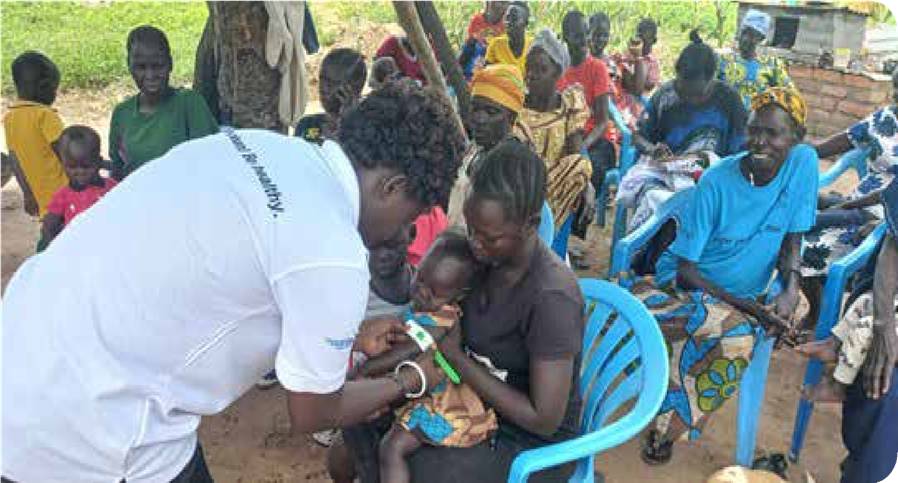
The organization also strengthens maternal, newborn, and child health (MNCH) through antenatal care, safe delivery services, postnatal care, and community-based management of acute malnutrition (CMAM) and infant and young child feeding (IYCF) support.
In addition, HADO promotes community health and outreach services, disease prevention and health promotion through immunization and awareness campaigns, and behavior change communication.
These efforts are further reinforced by health systems strengthening initiatives, including capacity building for health workers, improved supply chain management, infrastructure support, and evidence-based planning to enhance the overall resilience and effectiveness of the health system.
Projects
2026
Project Title: Cholera Outbreak Response project in Joppari Boma, Luri Payam.
In February 2026, Human Appeal Development Organization in collaboration with Central Equatoria State Ministry of Health, Health and WASH clusters conducted interagency rapid assessment in Jopari Boma, Luri Payam following suspected outbreak of Cholera in the area. Following the assessment, HADO established a cholera Response Project in Jopari Boma, supported by WHO, and Ministry of Health (February 2026 – update).
In addition, HADO rehabilitated 2 community boreholes to increase access to safe water, trained 15 Hygiene promoters that continue to provide hygiene and sanitation awareness. Because of lack of healthcare facility in the area, HADO established a mobile clinic and continue to provide essential primary
healthcare services to community uptodate.
2025
Project Title: Integrated School Health, SRHR and Protection Program in Luri Payam
In 2025 HADO implemented the Integrated School Health, Sexual and Reproductive Health and Rights (SRHR), and Protection Program implemented in five schools in Luri Payam aimed to improve the health, dignity, and protection of adolescent girls through comprehensive education and support services.
The project reached 287 school girls with awareness sessions on menstrual hygiene management, SRHR, and gender-based violence prevention, equipping them with essential knowledge on bodily changes, safe hygiene practices, reproductive health, and available protection services.
In addition, 89 vulnerable girls were supported with dignity and hygiene kits to reduce barriers to school attendance, promote confidence, and enhance their overall well-being and participation in education.
2023
Emergency Health Response Project – Wonduruba Payam
In 2023, Human Appeal Development Organization (HADO) delivered emergency health services in hard-to-reach areas of Wonduraba through mobile clinics, providing primary healthcare to over 50,000 people, with a strong focus on maternal and child health.
The response included treatment of acute malnutrition among children, nutritional support for pregnant and lactating women, vaccination campaigns, and expanded SRHR, mental health, and community awareness services, alongside capacity building for healthcare providers and the establishment of referral pathways and specialized SRHR clinics. The project was funded by HADO with material, drugs,
and medical supplies support from MOH.
2022
Project Title: Integrated Health, Nutrition and WASH Emergency Response –
Central Equatoria State
Between January – May 2022, Human Appeal Development Organization (HADO) implemented an integrated emergency response across Lainya County, Yei County, Morobo County, Kaya, and areas including Bungu, Kuli Papa, Ganji, Kagwada, and Wonduruba Administrative Payam, delivering Health, Nutrition, and WASH services through static and mobile clinics.
HADO trained over 50 health workers on Infection Prevention and Control (IPC) using Ministry of Health–approved modules, reached more than 6,000 beneficiaries with outpatient consultations, treatment, and malnutrition screening, and engaged over 18,500 individuals in health promotion and risk communication.
The project also facilitated referrals to specialized services and distributed over 1,000 Ebola Virus Disease (EVD) kits, in collaboration with the State Ministry of Health and the World Health Organization, strengthening access to essential services, disease prevention, and community resilience.