
Human Appeal Development Organization Launches South Sudan Clean Air Initiative Project to establish South Sudan’s First Air Quality Monitoring Network.
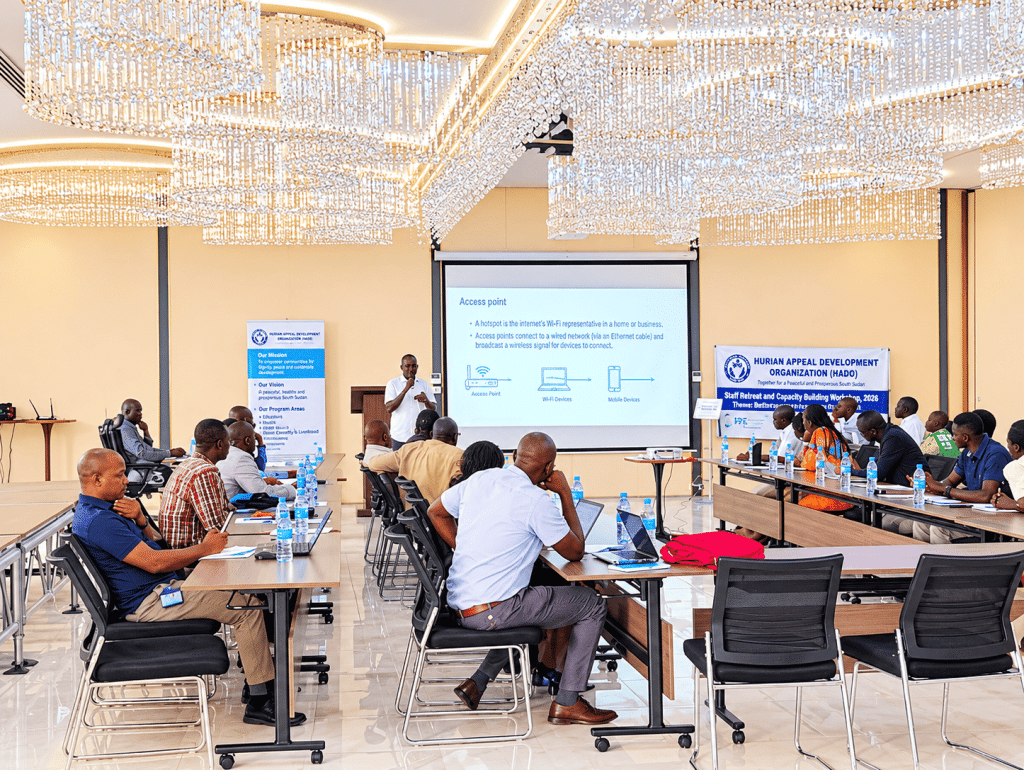
Juba, South Sudan | 12 November 2026 The Human Appeal Development Organization (HADO) officially launched the South Sudan Clean Air Initiative on 12 November 2026 at Glory Regency Hotel in Juba, bringing together 25 representatives from government institutions, United Nations (UN) agencies, and local government authorities to promote collective action towards improving air quality and strengthening environmental protection in South Sudan. The launch marked an important milestone in efforts to address air pollution through improved environmental monitoring, public access to reliable air quality information, and evidence-based policy development. The event provided a platform for stakeholders to learn about the project’s objectives, discuss the importance of air quality monitoring, and explore opportunities for institutional collaboration. The initiative, titled “South Sudan Clean Air Initiative: Generating Open Air Quality Data in Juba, Terekeka and Magwi Counties for Evidence-Based National Policy,” is implemented by HADO with financial support from the EPIC Air Quality Fund at the University of Chicago. Addressing the Challenge of Air Pollution Air pollution is an important environmental and public health concern. Vehicle emissions, open waste burning, household energy use, construction activities, and other sources can contribute to poor air quality, particularly in growing urban areas. Reliable and systematic air quality information is essential for understanding pollution levels, identifying potential areas of concern, and informing appropriate responses. The initiative seeks to help address gaps in locally available air quality information by establishing a long-term monitoring network and making the resulting data accessible. Bringing Stakeholders Together The launch brought together 25 representatives from government agencies, UN agencies, and local government authorities. Their participation highlighted the importance of a coordinated approach involving institutions with responsibilities in environmental protection, public health, governance, and local development. Government institutions play an important role in environmental policy and regulation. UN agencies and development partners can contribute technical knowledge and institutional support, while local authorities are essential to community-level environmental management. The event created an opportunity to build shared understanding and encourage cooperation. Establishing an Air Quality Monitoring Network A major objective of the initiative is to establish a long-term air quality monitoring network across Juba, Terekeka, and Magwi. The project plans to deploy 20 low-cost Binos Air Quality Monitors to measure outdoor air pollution, particularly fine particulate matter (PM2.5). The monitors are expected to generate air quality information that can be made freely accessible through open data platforms. This information can help communities, researchers, policymakers, and institutions better understand pollution patterns and environmental conditions in the targeted locations. The project implementation period is September 2026 to February 2028. Alongside equipment deployment, the initiative includes technical capacity-building to support monitoring, data collection, management, and interpretation. Promoting Open Data and Evidence-Based Policy An important feature of the initiative is its commitment to making air quality information openly available. Access to environmental data can support transparency, research, public awareness, and informed decision-making. The information generated by the monitoring network is intended to contribute to policy discussions and provide evidence that can support the Ministry of Environment and Forestry in its work towards developing South Sudan’s first national air quality standards. The project aims to strengthen the evidence available to policymakers as they consider measures to protect public health and the environment. Strengthening Technical Capacity and Public Awareness The project recognises that monitoring equipment alone cannot address air pollution. Effective monitoring also requires trained personnel, sound data management, institutional cooperation, and public understanding. Training and capacity-building activities will support HADO personnel and relevant government staff to operate monitoring equipment, collect environmental information, manage datasets, and interpret air quality measurements. Public awareness activities will help communities understand air pollution, its potential health effects, and practical ways to reduce exposure. Acknowledgement of the EPIC Air Quality Fund HADO acknowledges and sincerely appreciates the financial support of the EPIC Air Quality Fund, an initiative of the Energy Policy Institute at the University of Chicago. The Fund supports efforts to expand air quality monitoring and access to pollution data. Its support for the South Sudan Clean Air Initiative is an important contribution to strengthening local environmental monitoring capacity and improving the availability of air quality information in South Sudan. HADO appreciates the Fund’s support for locally implemented environmental action and for efforts to make air quality data available to communities and decision-makers. More information about the funder is available on the EPIC Air Quality Fund website: https://aqfund.epic.uchicago.edu/ Looking Ahead Following the launch, HADO will proceed with planned implementation activities, including deployment of monitoring equipment, technical training, environmental data collection, and information-sharing. Continued engagement with government institutions, UN agencies, local authorities, development partners, and communities will be important to the initiative’s progress. The monitoring information is expected to contribute to environmental research, public awareness, institutional planning, and policy discussions. The initiative also offers an opportunity to strengthen the role of environmental evidence in South Sudan’s sustainable development efforts. A Shared Responsibility for Clean Air The launch at Glory Regency Hotel on 12 November 2026 was an important step towards strengthening environmental protection and promoting access to reliable air quality information in South Sudan. The participation of 25 representatives reflected the importance of collective action in addressing environmental challenges. With HADO leading implementation and financial support from the EPIC Air Quality Fund at the University of Chicago, the initiative seeks to build a stronger foundation for understanding air pollution, informing policy, and protecting public health. Clean air is essential to healthy communities and sustainable development. Protecting it is a shared responsibility. Project Information Project South Sudan Clean Air Initiative Implementing organization Human Appeal Development Organization (HADO) Funder EPIC Air Quality Fund, University of Chicago Launch date 12 November 2026 Venue Glory Regency Hotel, Juba, South Sudan Participants 25 representatives from government agencies, UN agencies, and local government Target locations Juba, Terekeka, and Magwi Planned monitoring equipment 20 low-cost Binos Air Quality Monitors Implementation period September 2026 – February 2028 Project Funder Website: https://aqfund.epic.uchicago.edu/